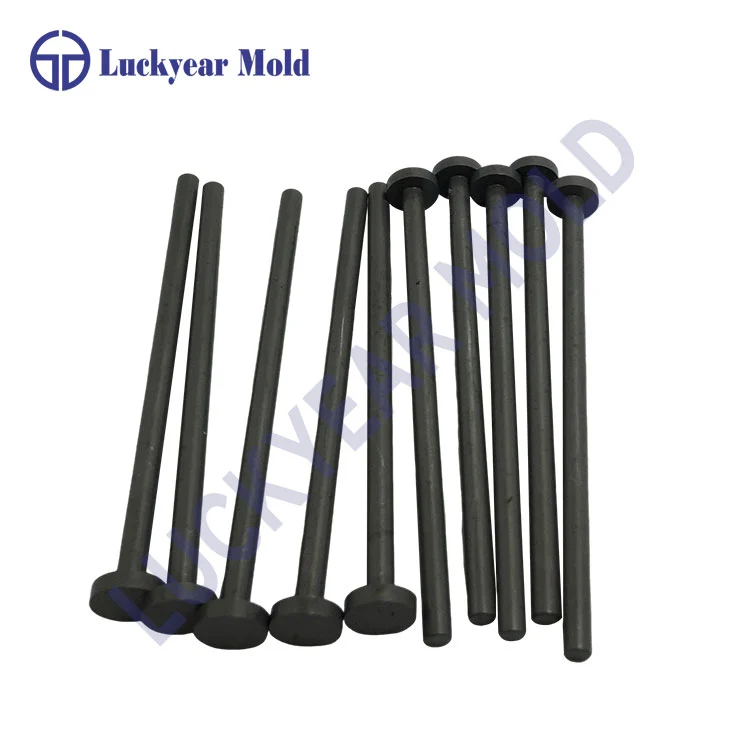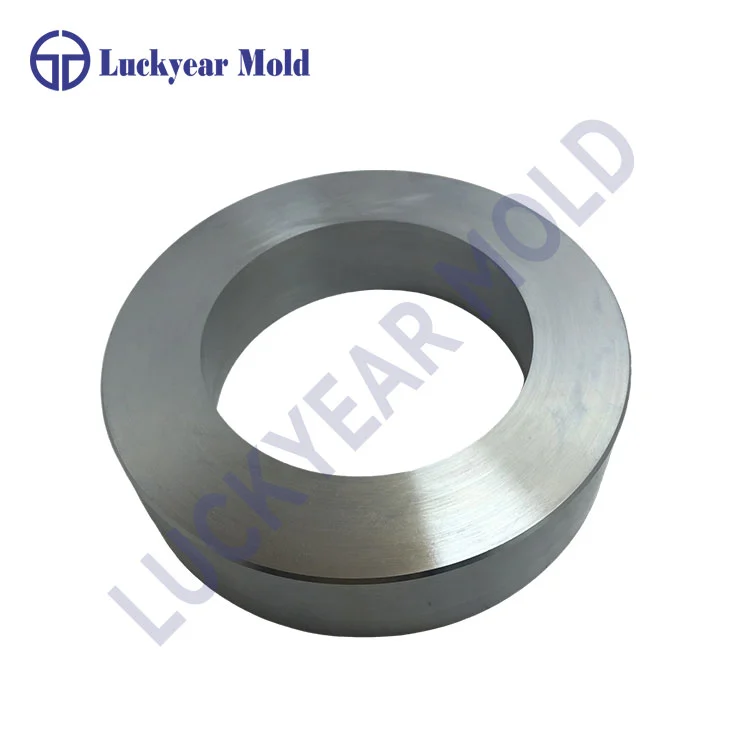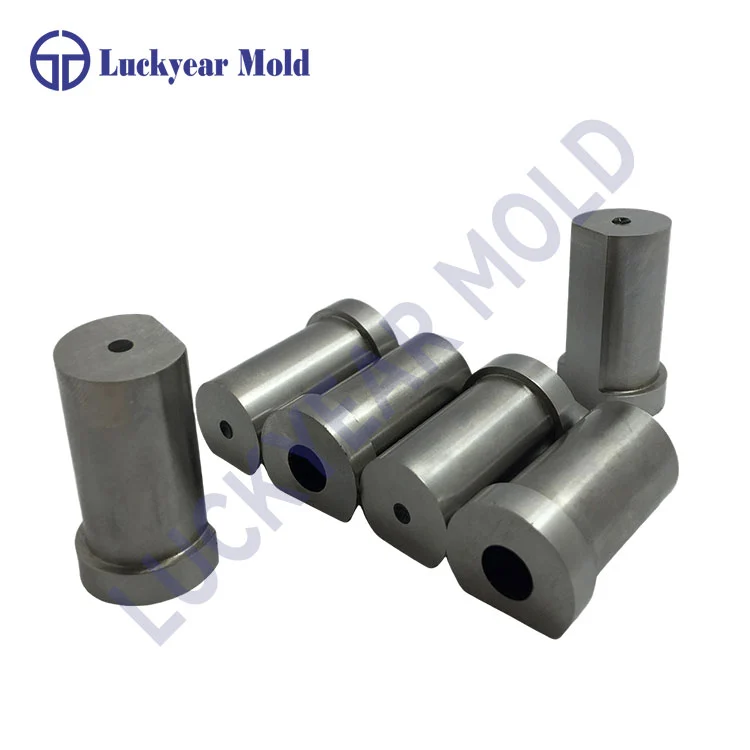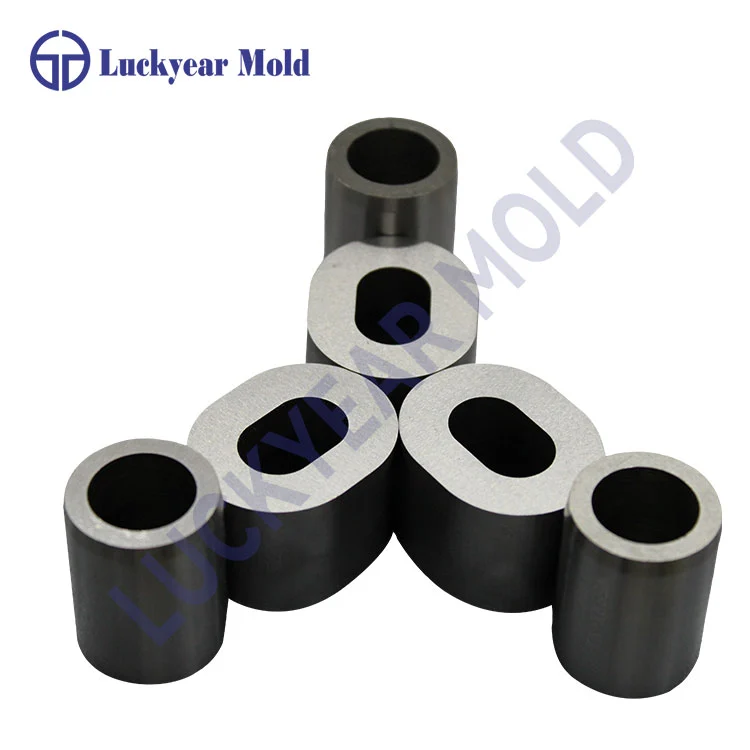

Luckyear Standard Punches with Coatings are drawing attention as industries look beyond basic wear resistance and examine whether surface treatments can truly extend tool life in practical production environments.
For years, the debate around coated and uncoated punch components has continued in precision mold and die industries. Some production teams report significant improvements after applying coatings, while others question whether claims of “three times longer service life” reflect actual working conditions or simply promotional language. The answer depends on material selection, operating conditions, coating type, and machining accuracy.

A standard punch works under repeated pressure, friction, and impact. During stamping operations, even a small amount of wear can affect dimensional accuracy, surface quality, and production stability.
The main purpose of a coating is not to make the punch stronger by adding a thick outer layer. Instead, it creates a protective surface that can reduce friction, improve resistance against abrasion, and slow down damage caused by repeated contact.
Common coating options used in precision tooling include:
| Coating Type | Main Function | Typical Application Consideration |
|---|---|---|
| TiN Coating | Improves surface hardness and reduces friction | Suitable for general stamping conditions |
| TiCN Coating | Provides higher wear resistance | Often considered for harder materials |
| DLC Coating | Reduces friction and improves surface smoothness | Used where lower friction is important |
| CrN Coating | Offers corrosion and wear resistance | Applied in environments requiring surface stability |
However, coating alone does not determine service life. A poorly processed punch with inaccurate dimensions may still experience early failure even with an advanced coating.
The statement that Standard Punches with Coatings can last three times longer than uncoated versions is not a universal rule. In some applications, the improvement can reach this level, while in others the difference may be smaller.
The actual result depends on several factors:
Different materials create different levels of stress. Aluminum sheets, stainless steel, and high-strength steel each produce different friction and impact conditions. A coating that performs well in one application may not provide the same improvement in another.
High-speed stamping creates more heat and friction. Under these conditions, a coated punch may maintain its surface condition for a longer period compared with an untreated component.
Surface treatment cannot compensate for poor machining accuracy. The punch body, tolerance control, heat treatment process, and surface finish all influence final performance.
Many production issues are not caused by coating failure itself. A closer look at common factors shows why some coated punches perform better than others.
| Performance Factor | Impact on Punch Lifetime |
|---|---|
| Base Material Quality | Determines strength and resistance against deformation |
| Machining Accuracy | Affects fitting accuracy and reduces abnormal stress |
| Surface Treatment Quality | Influences friction and wear resistance |
| Operating Parameters | Includes speed, pressure, and stamping material |
| Maintenance Condition | Helps detect early wear before major damage occurs |
For precision mold parts, consistency between design requirements and actual machining is especially important. Small dimensional errors may create uneven loading, causing localized wear that shortens tool life.
Modern mold development often involves internationally recognized standards, including China GB, Japan JIS, Germany DIN, and USA AISI specifications. These standards help maintain compatibility and repeatability across different tooling systems.
Luckyear has invested in precision processing and inspection equipment, including Sodick EDM machines, wire cutting machines, CNC lathes, grinding equipment, Nikon projectors, Mitutoyo 2.5D tool microscopes, height gauges, and hardness testing equipment.
These technologies are commonly used to control critical dimensions, surface quality, and hardness requirements during production. For standard mold parts, such details influence whether components can maintain stable performance during repeated cycles.
Choosing between coated and uncoated punches is not simply a matter of selecting the more advanced option. The better choice depends on production requirements.
| Comparison Item | Uncoated Punch | Coated Punch |
|---|---|---|
| Initial Cost | Usually lower | Usually higher due to additional treatment |
| Friction Resistance | Depends mainly on base material | Improved through surface layer |
| Suitable Production Conditions | General applications | Higher wear or longer cycle requirements |
| Maintenance Frequency | May require earlier replacement in demanding conditions | Potentially longer replacement intervals |
For simple stamping tasks with limited production cycles, an uncoated punch may still meet requirements. For repeated high-volume operations, surface coating can become a practical method to reduce downtime caused by frequent component replacement.
The discussion around coated punches is moving away from simple comparisons of “coated versus uncoated.” More attention is now being placed on how materials, machining processes, surface treatments, and working conditions interact.
A coating can extend tool life, but the improvement depends on whether the complete manufacturing process supports reliable performance. The idea of three times longer service life should therefore be evaluated through real application data rather than treated as a fixed number.
As precision tooling continues to develop, Standard Punches with Coatings remain an important option for improving wear resistance and production stability. Luckyear Precision Mold Parts Co., Ltd. continues to focus on precision components and customized mold parts, combining manufacturing experience and inspection control to support different tooling requirements.