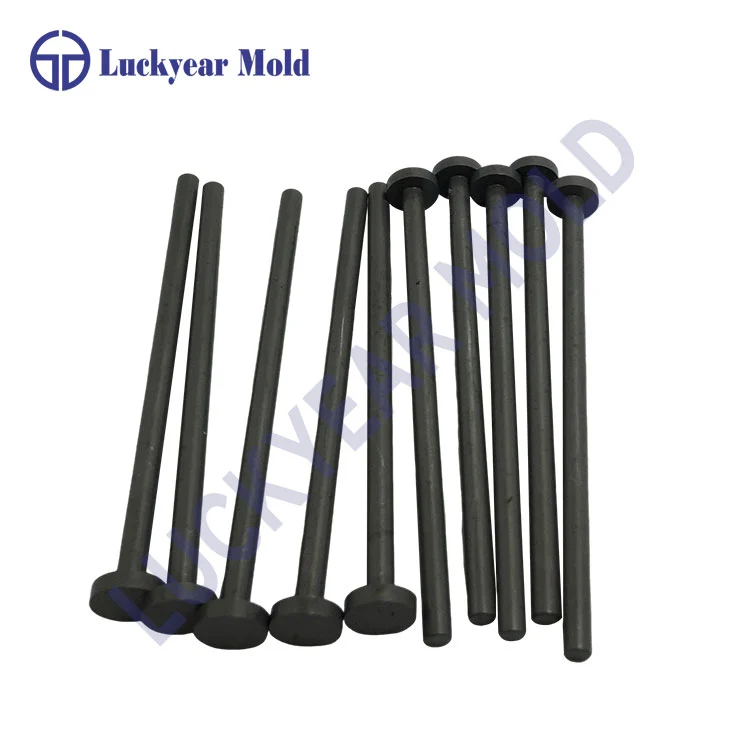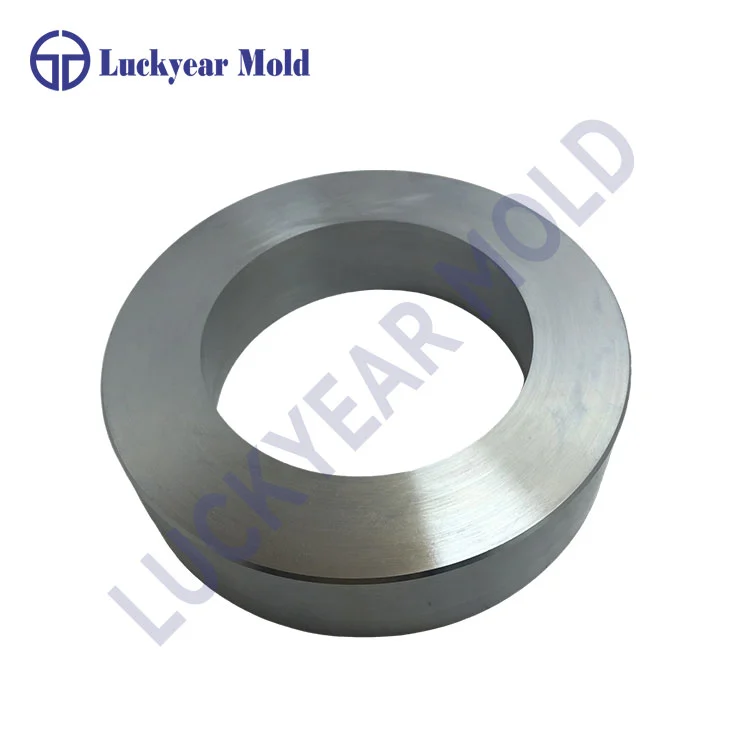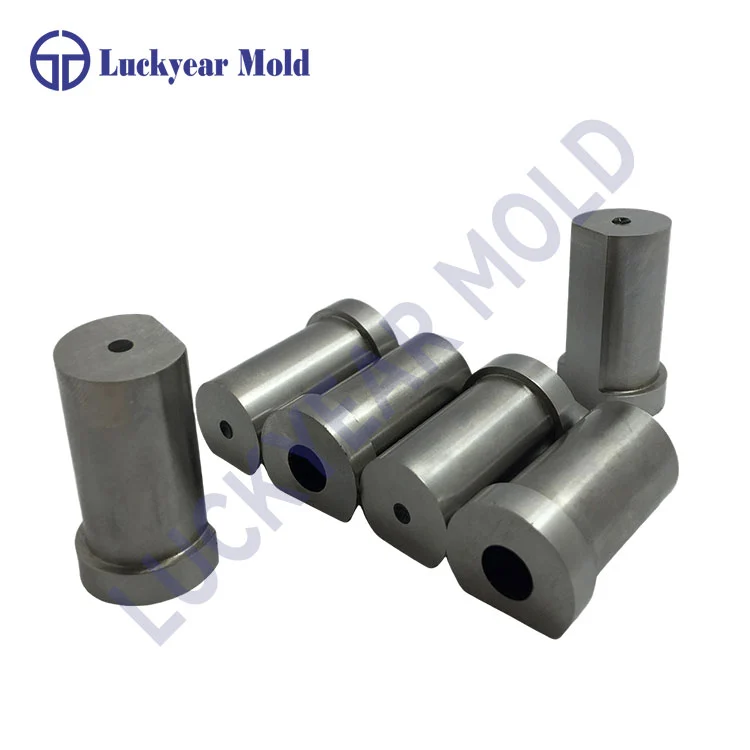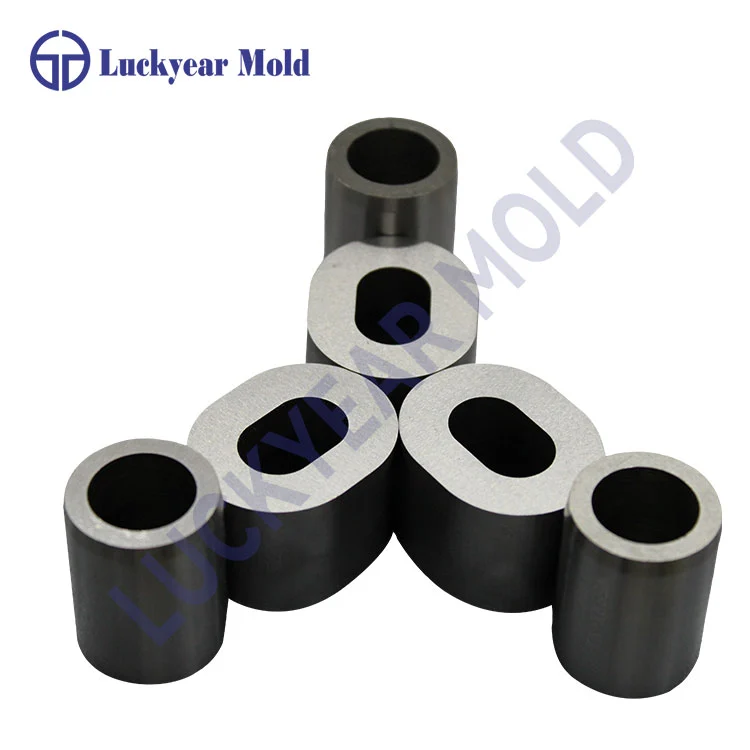

Precision tooling continues to advance as manufacturing industries demand tighter tolerances, longer service life, and higher production efficiency. Among the wide range of tooling materials available, Precision H40S Carbide Punches stand out for their impressive hardness, strength, and wear resistance. This article provides a professional, in-depth look into what this material is, how it performs, why it is chosen for demanding industrial environments, and what key specifications you should consider before purchase.
The goal is to help engineers, buyers, and manufacturing decision-makers understand the real performance advantages of Precision H40S Carbide Punches, along with detailed parameters and professional insights.
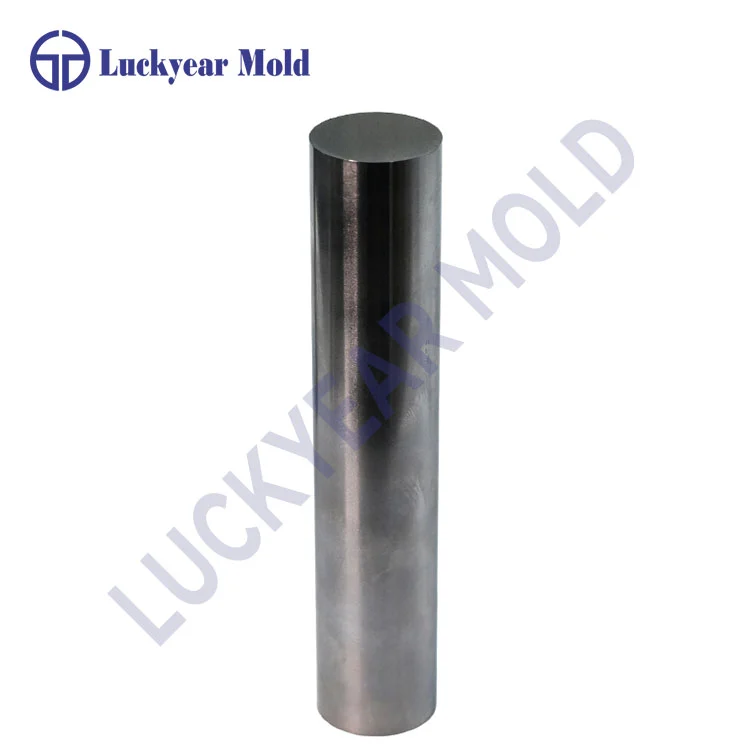
Precision H40S Carbide Punches refer to high-performance punches manufactured from H40S tungsten carbide—a fine-grain, ultra-hard alloy known for its durability and superior abrasion resistance. These punches are widely used in:
Metal stamping
Progressive dies
Precision mold inserts
Electronic component forming
High-speed punching tools
Automotive small-part production
Fineblanking and micro-punching
Because H40S carbide maintains excellent strength even under high pressure and continuous impact, it is preferred in applications requiring long-term dimensional stability and reduced downtime.
H40S carbide is engineered to deliver a balance of toughness + hardness, which is essential for high-speed or high-frequency stamping operations. Several technical advantages make it superior to conventional tool steels or standard carbides:
The high hardness (around 92–93 HRA) ensures minimized deformation and surface wear.
H40S boasts excellent toughness, preventing chipping during repeated impact cycles.
Its micro-grain composition delivers smoother cutting edges and longer operational life.
It maintains stability, reducing thermal cracking and extending longevity in continuous production.
The material allows machining of micro-tolerances, making it ideal for advanced manufacturing sectors.
These features dramatically increase tool life, reduce frequency of replacements, and improve cost-efficiency for mass production setups.
Below is a simplified but professional parameter table that highlights the core performance characteristics of typical Precision H40S Carbide Punches provided by advanced toolmakers.
| Parameter | Specification (Typical) |
|---|---|
| Material Grade | H40S Ultra-Fine Tungsten Carbide |
| Hardness | 92–93 HRA |
| Grain Size | Sub-micron / Ultra-fine |
| Transverse Rupture Strength (TRS) | 4000–4200 MPa |
| Density | 14.0–14.5 g/cm³ |
| Coating Options | TiN / TiCN / DLC / Customized |
| Tolerance Capability | ±0.001–0.002 mm |
| Surface Roughness | Ra 0.05–0.1 μm |
| Custom Shapes | Straight, Step, Ball-Head, Forming |
| Applications | High-speed stamping / Electronic parts |
These values demonstrate why Precision H40S Carbide Punches are preferred in environments where other materials wear rapidly or fail due to impact.
A comparison helps explain why industries upgrade to H40S-grade solutions:
Standard carbide: good
H40S carbide: excellent—significantly slower edge wear
Standard carbide: ±0.005 mm
H40S carbide: ±0.001–0.002 mm
Standard carbide: moderate
H40S carbide: high, reducing breakage risks
Standard carbide: may crack or deform
H40S carbide: stable over long cycles
Though H40S punches may cost slightly more, they provide greater productivity per cycle, reducing long-term tooling expenses.
This makes Precision H40S Carbide Punches a premium but cost-efficient choice for factories focusing on productivity and quality.
When selecting punches for industrial use, several factors play a major role:
Choose from straight punches, customized profiles, special forming punches, or micro-precision punches.
Depending on application speed and material hardness:
TiN: general wear protection
TiCN: superior lubricity
DLC: premium hardness & friction control
Uncoated: for specific finishing needs
Ultra-precise applications such as electronics require higher precision grades.
The correct punch hardness and coating depend highly on whether you punch copper, stainless steel, aluminum, or high-tensile steel.
High-speed stamping lines demand the maximum fatigue resistance and temperature stability offered by H40S carbide.
Consistency, CNC grinding accuracy, heat treatment expertise, and quality control determine real performance.
Precision H40S Carbide Punches enhance manufacturing in several measurable ways:
Reducing the number of shutdowns and replacements.
Producing consistent part dimensions and smooth cut edges.
Minimizing burr formation and material deformation.
Supporting high-speed, continuous stamping cycles.
Less maintenance, fewer stoppages, and improved overall efficiency.
For companies aiming to elevate mass production performance, upgrading to Precision H40S Carbide Punches is a strategic investment.
They are built from ultra-fine grain H40S carbide, which offers superior hardness, high TRS strength, and excellent wear resistance. These features significantly extend tool life compared with traditional tool steel or standard carbide punches.
Because they maintain dimensional stability under continuous impact and high temperatures. The combination of ultra-fine grain structure and enhanced toughness ensures accurate punching even at high speeds.
Their high hardness and sharp cutting edges reduce burrs, deformation, and surface irregularities. This leads to cleaner cuts, consistent dimensions, and fewer quality control issues.
Electronics, automotive, aerospace, fineblanking, hardware manufacturing, and precision mold industries rely heavily on H40S punches due to their accuracy and durability.
For customized Precision H40S Carbide Punches, technical consultation, or bulk orders, please contact Dongguan Luckyear Precision Mold Parts Co., Ltd. Our professional engineering team provides high-accuracy manufacturing solutions tailored to your production needs.